
Nobody in my family taught me about gold, silver, or what a real gemstone looks like. I suspect nobody teaches it in most houses.
What taught me, in the end, was moving. Home to dorm, dorm to a room in a shared apartment, then another room, then an apartment, then another. With every move, I’d pack a donation box, and every time it swallowed some jewelry: necklaces I’d bought on a whim and never worn, earrings that had darkened because they were brass under a thin layer of plating, mass-market pieces that no longer matched my style. The pile shrank with every new address.
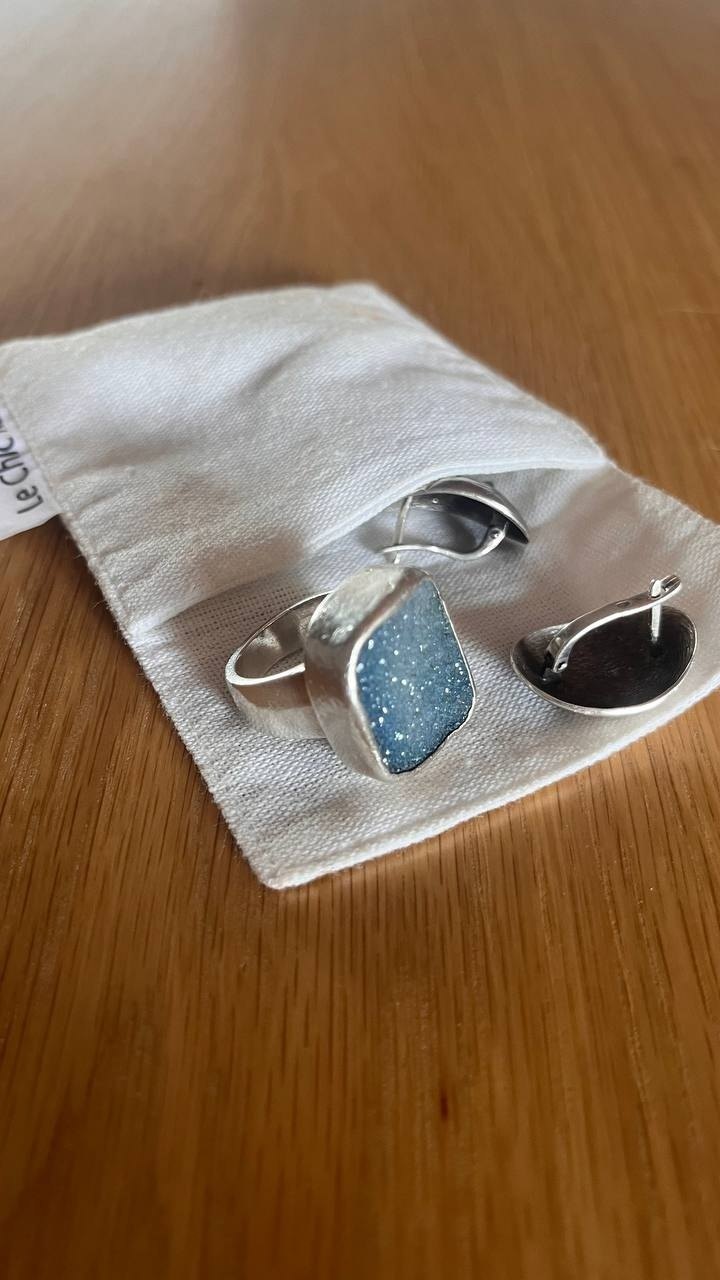
Eventually, it distilled to four pieces: silver earrings my mom gave me for finishing high school, a silver pendant from my boyfriend, a freshwater-pearl choker from a designer shop on a trip to Georgia (my most expensive jewelry purchase, probably criminally overpaid; I don’t remember the price, just that it was A LOT), and a heavy ring with a big sparkly blue stone, grabbed cheap at a thrift store without thinking.
Looking at those four pieces, I realized two things. From then on, I’d buy only jewelry worth keeping through a move. And the thrift-store ring, with a surprising little 925 stamped inside the band, had convinced me that secondhand jewelry deserved a much closer look.
And so I started digging. The algorithm gods noticed and buried me in tips and tricks for identifying real gold, diamonds, and rubies. Spoiler alert: real rubies are almost impossible to find, and about half the tips turned out to be wrong, with the short videos being especially unhinged.
The real answers had to be hunted down: assay-office studies, auction records, published guidance from the Gemological Institute of America (GIA), and long Reddit answers from practicing jewelers.
And one beautiful day, I caught myself explaining to a friend how wartime metal shortages pushed costume-jewelry makers to use sterling silver instead of cheap base metals, meaning an ordinary brooch from that time could actually be silver beneath all that glass sparkle. My friend said I knew way too much about this.
So, to keep myself from turning into a jewelry-facts yapper, I wrote it all down.
I’ve rewritten this book twice already. When you’re deep into a topic, you forget what it was like to start from zero, and that’s exactly why so many jewelry identification books are boring to read: too much, too dense. That’s why this book has two parts. “0 to 1” covers the basics, short enough to read over your Saturday morning coffee before you go hopping from garage sale to thrift store to estate sale. “1 to 100” goes in depth, for when you want to be in the top 1% of hunters.
A special thank you to the communities this book was reported from: r/ThriftStoreHauls, r/Vintage_Jewelry, r/WhatsThisWorth, r/JewelryIdentification, and r/Scams.
A Note on the Stories and What Treasure Means
Everything in this book happened to real people, and the endnotes say where and when.
The finds, the scams, the appraisals, and the family letters are drawn from named news reporting, police advisories, court filings, broadcast segments, published interviews, and public posts by the people who lived them. Nobody in this book is invented, and no invented detail has been attached to a real person.
One more note: I have nothing against costume jewelry. If a piece is beautiful and you love it, it’s worth keeping. This book is about a specific skill: knowing what you can find cheap, sell for more if you need to, and count on to hold its value for years.
Write to me at hello@spotatreasure.com. You can read chapter one free, or get an email when the ebook is out.