
The short answer
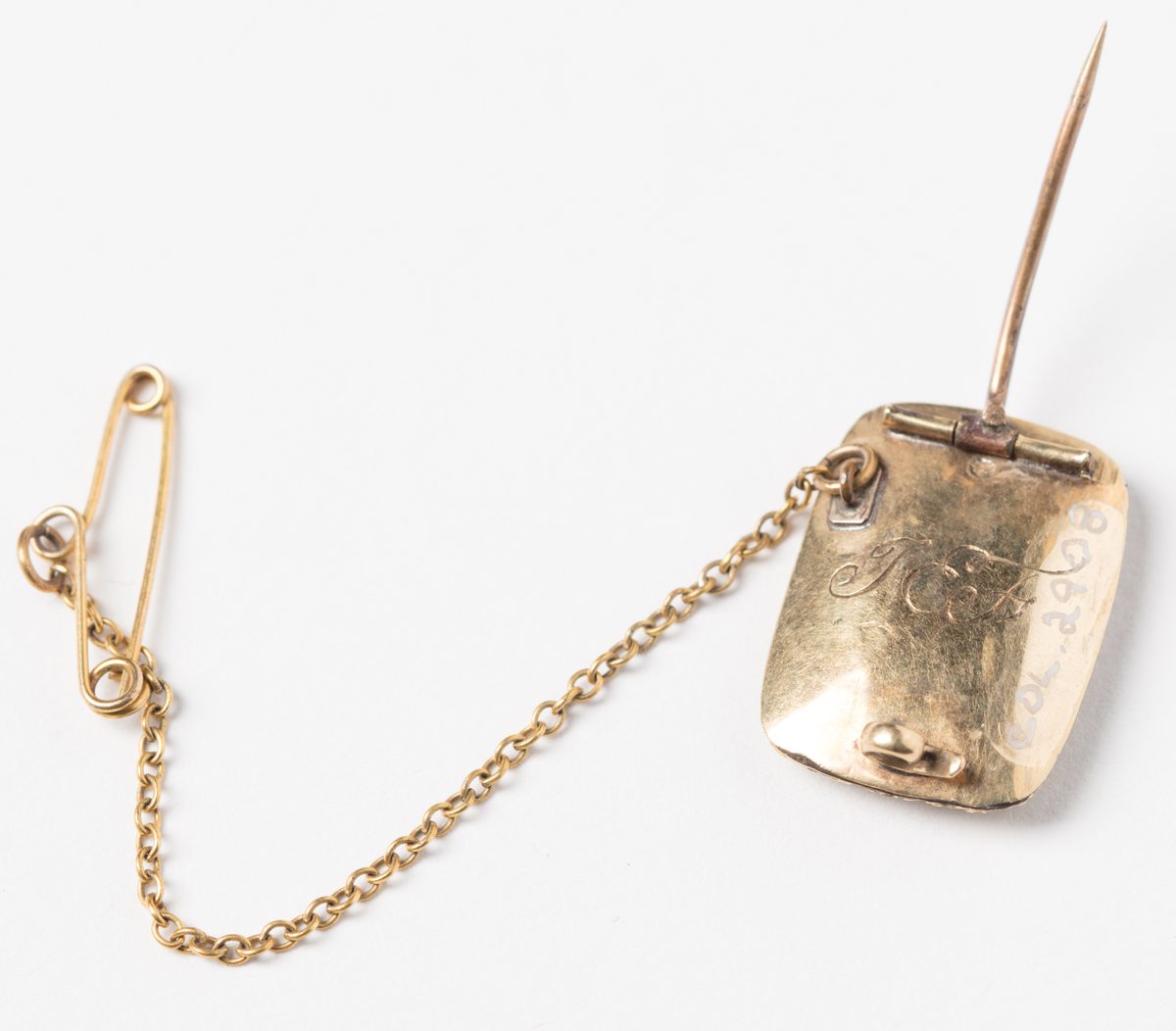
A clasp gives you the earliest date a piece could be from, never the exact year. A plain C-shaped catch with a long pin and a tube hinge usually means Victorian or older. A safety catch that turns to lock came in the early 1900s. Screw-back earrings were patented in 1894. A lobster claw means the 1970s or later, or a replacement.
Free: the hallmark chart
Every common gold, silver, and platinum mark on one printable page, with the letters that cancel the number.
The printable chart is on its way. Leave your email and you’ll get it as soon as it’s done, plus a note when the book is out. You can unsubscribe anytime. Privacy.
Old jewelry rarely comes with a date. The clasp is often the closest thing you’ll get.
People who identify jewelry read clasps at a glance. In 2026, one identifier’s whole verdict on a brooch was “Yep. Tube hinge. C clasp. Victorian. Nice.”1 You can learn to read clasps that fast.
The clasp card
This card is from chapter ten of my book.2
| Fitting | What it suggests |
|---|---|
| Plain C-shaped catch with no lock, a long pin running past the brooch’s edge, and a tube hinge | Victorian or earlier: before about 1890 to 1910 |
| Push-pull “trombone” catch (a little tube that slides open) | About 1850 to the 1940s, mostly European |
| Safety catch that rotates to lock the pin | Early 1900s on; standard by the 1920s |
| Spring ring on a chain | About 1900 on; its detachable ancestor, the bolt ring, from the 1840s |
| Box clasp with a figure-eight safety | Victorian to today; on pearls it signals quality more than age |
| Fish-hook clasp on a pearl strand | Most common from the 1920s to the 1950s |
| Screw-back earrings | Patented in 1894; standard from about 1900 to the 1950s |
| Lobster claw | 1970s on; on an older-looking piece, a replacement |
How to use it
Turn the piece over and find the fitting. Match it to the card, and take that date as the earliest the piece is likely to be. A brooch with a safety catch that turns to lock probably isn’t older than the early 1900s, but it could easily be from 1960.
While you’re there, open and close the clasp. It takes more wear than any other part. A good one closes with a clean, firm snap, and one that fights you when it’s new only gets worse.3
When the clasp lies
Clasps get replaced, and a replacement only dates the repair. So a lobster claw on a necklace that looks a hundred years old usually means someone fixed it.
A replacement can also make good jewelry look cheap. One estate lot looked like junk because every chain had a cheap magnetic clasp. Then a commenter noticed the clasps were replacements, put on by an elderly owner with arthritis who loved those pieces enough to keep wearing them.4
So read the clasp together with the marks (my hallmark chart decodes them) and with how carefully the piece is made.
The next step
Look for the maker’s mark and the purity stamp. They often sit on the clasp itself, on the little tongue that snaps in or on a tag beside it. Then run the four stamp checks.
Chapter ten of my book also has a one-glance timeline of jewelry eras, from Georgian to Retro. You can read chapter one free.
Sources
-
Comment under “Crazy find at jewelry store,” r/Antiquejewelry, April 26, 2026, reddit.com/comments/1svyrw0. Quoted as written; the brooch’s early-to-mid-1800s dating is the poster’s. ↩
-
Card dates assembled from dealer and appraiser references that agree to within about a decade; where they differ, the card gives the range. Brooch fittings: Global Gemology & Appraisals, “Dating Brooch Fasteners” (handmade C-catch with tube hinge before about 1910; trombone catch patented in Britain in 1850; modern rotating safety catch invented 1911); AC Silver, “Dating Jewellery by Clasp Fastenings,” March 7, 2021; The Spruce Crafts, “How to Identify and Date Old Brooch Styles” (trombone on European pieces from the 1890s through the 1940s; rollover safety catch common from the late 1920s); Antique Identifier, “Date Vintage Jewelry by Clasp Type” (long pin and tube hinge before about 1890; lever safety catch from about 1901, dominant by 1920). Necklace and earring findings: Antique Identifier (spring ring in mass production from about 1902; screw-back earrings patented 1894 and dominant about 1900 to 1955; lobster claw from the 1970s); Mozeris Fine Antiques, “Necklace Clasp Types,” June 6, 2025 (bolt ring from the 1840s; box clasp with safety from the Victorian period to today; fish hook most common 1920s to 1950s; lobster claw from the 1970s, crediting Lang Antiques for Cartier’s introduction of the snap hook); Jewelry Identifier, “Types of Jewelry Clasps,” March 12, 2026 (screw-backs 1900 to the 1960s; lobster claw 1970s on). Reddit identifiers use the same tells as color (e.g., reddit.com/comments/1svyrw0). ↩
-
Angara, “Your Complete Guide to Handcrafted vs. Mass-Produced Jewellery,” April 2026 — prong variation, scooping, mold seams, polish depth, clasp action. (Retailer education; its tells cross-check against the dealer and auction sources below.) ↩
-
r/ThriftStoreHauls estate-lot find as reported by The Cool Down, August 7, 2025; the magnetic-clasp observation is a commenter’s, quoted in the report. ↩